
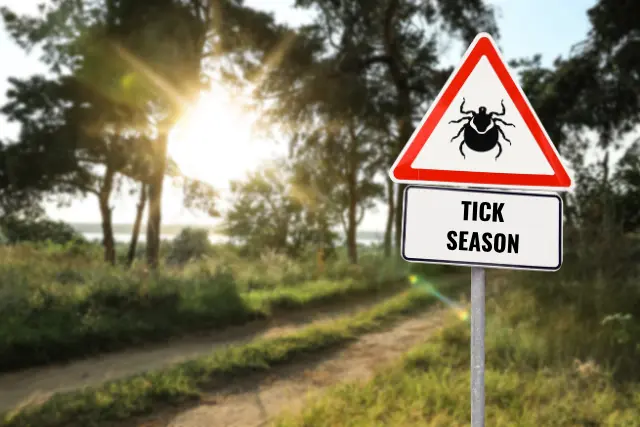
May is officially Tick Awareness Month in New Jersey. And honestly? The timing makes sense. This is exactly when tick activity starts ramping up in Hudson County, and it doesn’t slow down until well into September.
If you’ve got a yard, a dog, or kids who play outside, you need to know what you’re dealing with.
What Makes May and June So Bad
Most people picture a fat, blood-filled tick when they think about the problem. But that’s actually the adult stage, and those are the easy ones to spot. The real danger comes from nymphs, which are active from late May through early July. A nymph is about the size of a poppy seed. You could have one feeding on your ankle right now and not feel a thing.
Here’s why that’s such a problem. Nymphs are behind most of the Lyme disease cases in New Jersey. Not adults. Nymphs. They latch on, they feed for a day or two, and you never know it happened. No pain, no itch, nothing. Three weeks later you’ve got a fever and your joints hurt and you’re racking your brain trying to figure out where you got bit. Most people can’t, because they never saw the tick in the first place.
NJ is one of the worst states in the country for Lyme. That’s been true for years. But what’s changing is the window. Researchers presented data at ID Week 2024 showing tick-borne illness in New Jersey is climbing, and a big part of that is the season getting longer on both ends. October, November, even mild stretches in winter are producing cases now.
It Doesn’t Just Happen on Hiking Trails
Ask most people where they think Lyme disease comes from and they’ll say camping, hiking, somewhere deep in the woods. The reality? About 70% of cases happen at home. Your backyard. Your garden. The strip of grass along your driveway.
Ticks in Hudson County don’t need a forest. They hang out in tall grass along your fence. In the leaf litter that piles up under bushes. Along the edge where your lawn meets an overgrown lot or a neighbor’s untrimmed hedges. Shady, damp areas that hold moisture are their favorite spots.
They do this thing called “questing” where they climb to the tip of a grass blade or low branch and stretch their front legs out, just waiting for something warm-blooded to walk by. Your kid running through the yard. Your dog sniffing around a bush. You, pulling weeds near the fence line. That’s all it takes.
Which Ticks Live in Hudson County?
We’ve got three main species around here, and they don’t all carry the same stuff.
Deer ticks (the black-legged ones) are the biggest concern. Lyme, anaplasmosis, babesiosis. That’s their resume. The adults come out in spring and fall, but remember those nymphs we talked about? Late May is when they start showing up, and they’re almost invisible.
Then there’s the lone star tick. If you haven’t dealt with one yet, you might soon. Their range has been creeping further north into New Jersey over the past decade or so. They move fast, they’re aggressive biters, and they spread ehrlichiosis. Easy to identify though. The females have a single white spot right in the center of their back. You can’t miss it.
The American dog tick is the one most people recognize. Bigger, brown, shows up on your golden retriever after a walk. These can carry Rocky Mountain spotted fever, but honestly, that’s pretty rare around Hudson County. Still not a tick you want hanging around.
Keeping Ticks Out of Your Yard (and Off Your Family)
Your yard is ground zero. That’s where most of the exposure happens. So start there.
Mow the grass. Seriously, keep it short. Especially along fence lines, property edges, and around garden beds. That tall strip of grass between your yard and the neighbor’s lot? Ticks love it. Rake up leaves, clear brush piles, and get rid of anything that traps moisture. Ticks dry out in direct sun, so the more sunlight that hits the ground, the fewer places they can survive.
Got a swing set or patio furniture near the trees? Slide it into the sunniest part of the yard. That one change alone can cut down on how many ticks your family comes in contact with.
Checking Your Dog (and Yourself)
Your dog can’t tell you they picked something up outside. So every time they come back in, do a quick once-over. Part the fur around the ears. Spread the toes apart and look between them. Lift the collar and feel along the neck. It takes maybe two minutes, and it’s the fastest way to catch a tick before it’s been on long enough to transmit anything. For more on keeping outdoor pests away from your animals, take a look at our guide to protecting your pets and home from fleas and ticks.
Here’s the thing people miss though. If your dog keeps getting ticks, they’re not bringing them from the park three blocks away. Those ticks are in your yard, breeding in your yard, and waiting in your yard.
Same drill for the humans in the house. After yard work, after the kids play outside, before anyone sits on the couch. Pants tucked into socks, sure, it looks ridiculous. My neighbor gave me a hard time about it once. Then he got Lyme disease that August and stopped laughing. The CDC’s advice is to do a full body check within a couple hours of being outdoors. Focus on the spots where skin folds or where clothing sits tight. Behind your ears, your waistline, back of the knees, scalp.
Pulled a Tick Off? Here’s What Actually Works
Forget the match. Forget the Vaseline. Forget nail polish. All of those old tricks? They just irritate the tick and can make it spit more saliva into the wound. That’s the opposite of what you want.
What works: a pair of pointy tweezers. Get the tips as flush against your skin as you can, right where the tick’s mouthparts go in. Pull up. Slow, steady, straight up. No twisting, no jerking. If the head breaks off, try to get it out with the tweezers, but don’t dig around. Wash everything with soap and water.
Then pay attention over the next few weeks. A little redness right at the bite is normal. What’s not normal is a rash that keeps growing, especially if it starts looking like a ring or bullseye. That’s textbook early Lyme. Call your doctor. Treatment at that stage is straightforward, usually just a round of antibiotics. Wait too long and things get a lot more complicated.
When Your Yard Needs Professional Treatment
If you’re pulling ticks off your family or pets more than once, there’s an active population breeding in your yard. At that point, trimming the grass isn’t going to solve it.
Professional tick treatments target the zones where ticks actually live and lay eggs. The shaded perimeter of your yard, garden beds, under decks, and along any edges where lawn meets woods or brush. Treatments work best when applied in spring before populations peak, and again in early fall when adult ticks have their second wave of activity.
Jersey City Exterminators provides tick control for homeowners across Jersey City, Hoboken, North Bergen, Bayonne, and all of Hudson County. If ticks are showing up on your property, call (201) 460-6068. We can usually get a technician out the same day.